
Letter Before Action UK
Formal pre-legal notice under the Civil Procedure Rules Pre-Action Protocol — demand payment or resolution before taking court proceedings.
Write My Letter Now →A Letter Before Action is the essential first step before taking any dispute to court in the UK. Under the Civil Procedure Rules Pre-Action Protocol, courts expect both parties to attempt to resolve a dispute before litigation. A properly worded Letter Before Action is how you demonstrate you have followed the correct process. Whether you are owed money, disputing a breach of contract, or pursuing a small claims court case, sending an LBA puts the recipient on formal notice and creates the paper trail that judges look favourably upon.
An LBA is one of the most effective tools available to individuals and small businesses. It puts the recipient on formal notice that legal action will follow if the matter is not resolved, and it creates a paper trail that courts look favourably upon. Many disputes are resolved at this stage without ever reaching court, because the recipient understands that ignoring a Letter Before Action makes their position significantly worse if proceedings follow.
PostRight generates a professionally worded Letter Before Action that complies with the Civil Procedure Rules Pre-Action Protocol, clearly stating the claim, the amount owed, and the deadline for response. Your letter is printed and posted via Royal Mail, arriving as a formal legal document. Sending your LBA by post rather than email is important. A posted letter creates a dated physical record, is harder to dismiss, and aligns with the expectations of the court process.
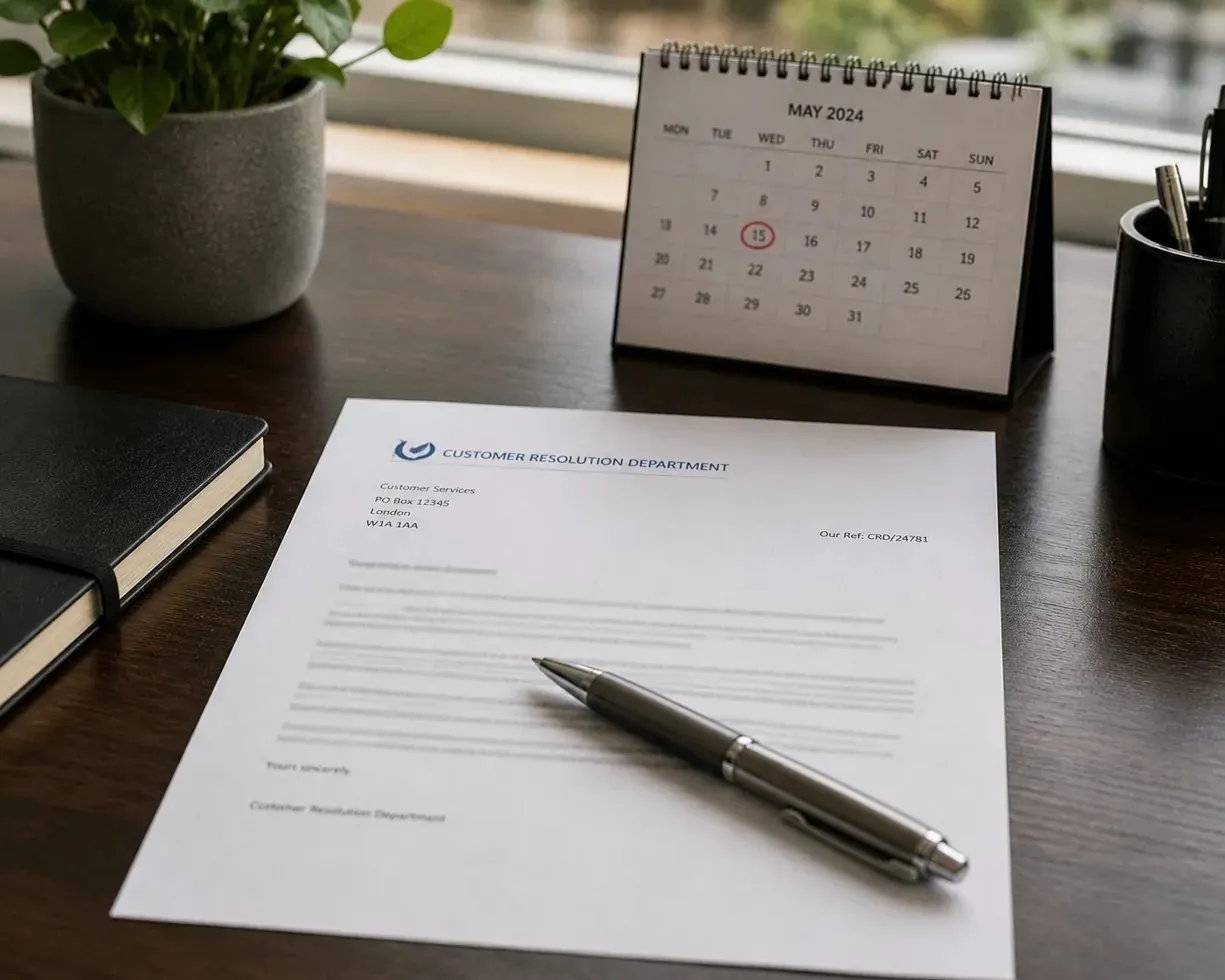
What Is a Letter Before Action?
A Letter Before Action, also known as a Letter Before Claim, is a formal written notice telling the other party that you intend to start court proceedings unless they resolve the matter. Sending one is not optional in most cases. The Civil Procedure Rules require it under the Practice Direction on Pre-Action Conduct, and a judge can penalise you in costs if you go to court without sending one first.
When You Need to Send a Letter Before Action
You should send a Letter Before Action whenever you intend to bring a civil claim. Common situations include unpaid invoices, refused refunds, breach of contract, debts owed to you, deposit disputes, and personal injury claims. Even if you eventually settle without going to court, having sent a properly worded Letter Before Action strengthens your position and creates a paper trail.
What a Letter Before Action Must Include
A valid Letter Before Action contains the full name and address of both parties, a clear statement of the claim and the amount involved, the legal basis for the claim, a list of supporting evidence, a deadline for response (typically 14 days for consumer matters, 30 days for business claims), and a clear statement that you will issue proceedings in the county court if the deadline passes without resolution.
Letter Before Action Template: Annotated Walkthrough
A well-structured Letter Before Action follows a consistent format that courts and solicitors recognise. Here is how each section should be written and why it matters.
Your details (top of the letter). Include your full name and address at the top right, followed by the date. The date matters because it starts the clock on your stated deadline. Use the full date in the format "5 July 2026" rather than a numeric shorthand.
Recipient details. Address the letter to the correct legal entity. For a company, use the registered company name (not a trading name) and the registered office address. You can find this on Companies House at companieshouse.gov.uk. For an individual, use their full name and last known address.
Subject line. A clear subject line such as "Letter Before Action — Claim for £[amount] — [brief description]" signals immediately that this is a formal legal notice. It also helps if the letter is passed to a legal or compliance team.
Opening paragraph — the claim. State plainly what you are claiming and why. For example: "I write to give you formal notice that I intend to commence proceedings in the county court to recover the sum of £[amount], being the outstanding balance of invoice number [X] dated [date], which remains unpaid despite previous requests."
Background facts. Set out the key facts in chronological order. Keep this section factual and concise. Include dates, amounts, and any relevant reference numbers. Avoid emotional language — courts respond to facts, not frustration.
Legal basis. State the legal basis for your claim. For unpaid invoices, this is breach of contract. For faulty goods, cite the Consumer Rights Act 2015. For flight compensation, cite UK Regulation 261/2004. Naming the correct legal basis shows you understand your rights and are serious about pursuing them.
Evidence available. List the evidence you hold: invoices, receipts, emails, photographs, contracts, or witness statements. You do not need to attach everything at this stage, but listing it demonstrates that your claim is well-documented.
The remedy you are seeking. State clearly what you want: payment of a specific sum, a refund, a repair, or some other remedy. Be precise. "I require payment of £[amount] in full" is better than "I want to be compensated".
Deadline. Give a clear deadline: "I require your response within 14 days of the date of this letter." 14 days is standard for consumer matters. 30 days is more appropriate for business-to-business claims. Do not give an open-ended deadline.
Consequences of non-response. State what you will do if the deadline passes: "If I do not receive a satisfactory response within the above period, I will issue a claim in the county court without further notice." This is not a threat — it is a statement of your legal right.
Closing. Sign off formally: "Yours faithfully" if you do not know the recipient's name, or "Yours sincerely" if you do. Print and sign your name.
Letter Before Action: Worked Example
The following is a filled-in example of a Letter Before Action for an unpaid invoice. It shows how the template sections above translate into a real letter.
Jane Smith
14 Maple Avenue
Birmingham
B12 4QR
5 July 2026
Acme Contractors Limited
100 Industrial Way
Birmingham
B7 5NP
Dear Sir or Madam,
LETTER BEFORE ACTION — CLAIM FOR £1,850.00 — UNPAID INVOICE
I write to give you formal notice that I intend to commence proceedings in the county court to recover the sum of £1,850.00 (one thousand eight hundred and fifty pounds), being the outstanding balance of invoice number INV-2026-047 dated 10 May 2026, which remains unpaid despite my previous requests.
Background
On 15 April 2026, I engaged Acme Contractors Limited to carry out kitchen installation works at the above address. The agreed price was £3,700.00. I paid a deposit of £1,850.00 on 16 April 2026 by bank transfer (reference: ACME-DEP-001). The remaining balance of £1,850.00 was due on completion of the works, as agreed in writing by email on 14 April 2026.
The works were completed on 8 May 2026. I raised invoice INV-2026-047 on 10 May 2026 requesting payment of the outstanding balance within 14 days. Despite a follow-up email on 28 May 2026 and a telephone call on 12 June 2026, no payment has been received.
Legal Basis
This claim is brought for breach of contract. The agreement between us constitutes a binding contract, and your failure to pay the agreed sum upon completion of the works is a breach of that contract.
Evidence
I hold the following evidence in support of this claim: the written agreement by email dated 14 April 2026; bank transfer confirmation of the deposit payment dated 16 April 2026; invoice INV-2026-047 dated 10 May 2026; follow-up email dated 28 May 2026; and a record of the telephone call on 12 June 2026.
Remedy Sought
I require payment of £1,850.00 in full, together with interest at 8% per annum from the date the invoice fell due (24 May 2026) under the Late Payment of Commercial Debts (Interest) Act 1998.
Deadline
I require your response within 14 days of the date of this letter, that is by 19 July 2026. If I do not receive payment or a satisfactory written response within this period, I will issue a claim in the county court without further notice. I will also seek recovery of court fees and any other costs incurred.
Yours faithfully,
Jane Smith
This example shows the key elements: a clear subject line, a precise claim amount, a factual background, the legal basis, a list of evidence, a specific remedy, a firm deadline, and a clear statement of next steps. A PostRight letter follows this same structure, generated from your answers to the questionnaire and posted by Royal Mail.
After Sending: The 14-Day Window
The recipient has the deadline period to respond, settle, or open a dialogue. If they ignore it, you can issue a claim through Money Claim Online or the county court. If they respond with a counter-offer, you can negotiate. Either way, the Letter Before Action has done its job: it has either resolved the dispute or set up the next step.
What's included in your letter
- ✓Formal notice compliant with the Civil Procedure Rules Pre-Action Protocol
- ✓Clear statement of the claim, amount owed, and supporting facts
- ✓Specific deadline for response (typically 14 days)
- ✓Notice that court proceedings will be commenced if the matter is not resolved
- ✓Professional format that courts and solicitors recognise
Legal basis: Civil Procedure Rules Pre-Action Protocol
Frequently Asked Questions
Ready to send your letter?
PostRight prints and posts your letter via Royal Mail — no printing, no stamps, no hassle.
Start Your Letter Now →From £2.79 · Printed & posted by Royal Mail