
Hybrid Mail vs Post Office: Which Wins?
Published 26 April 2026
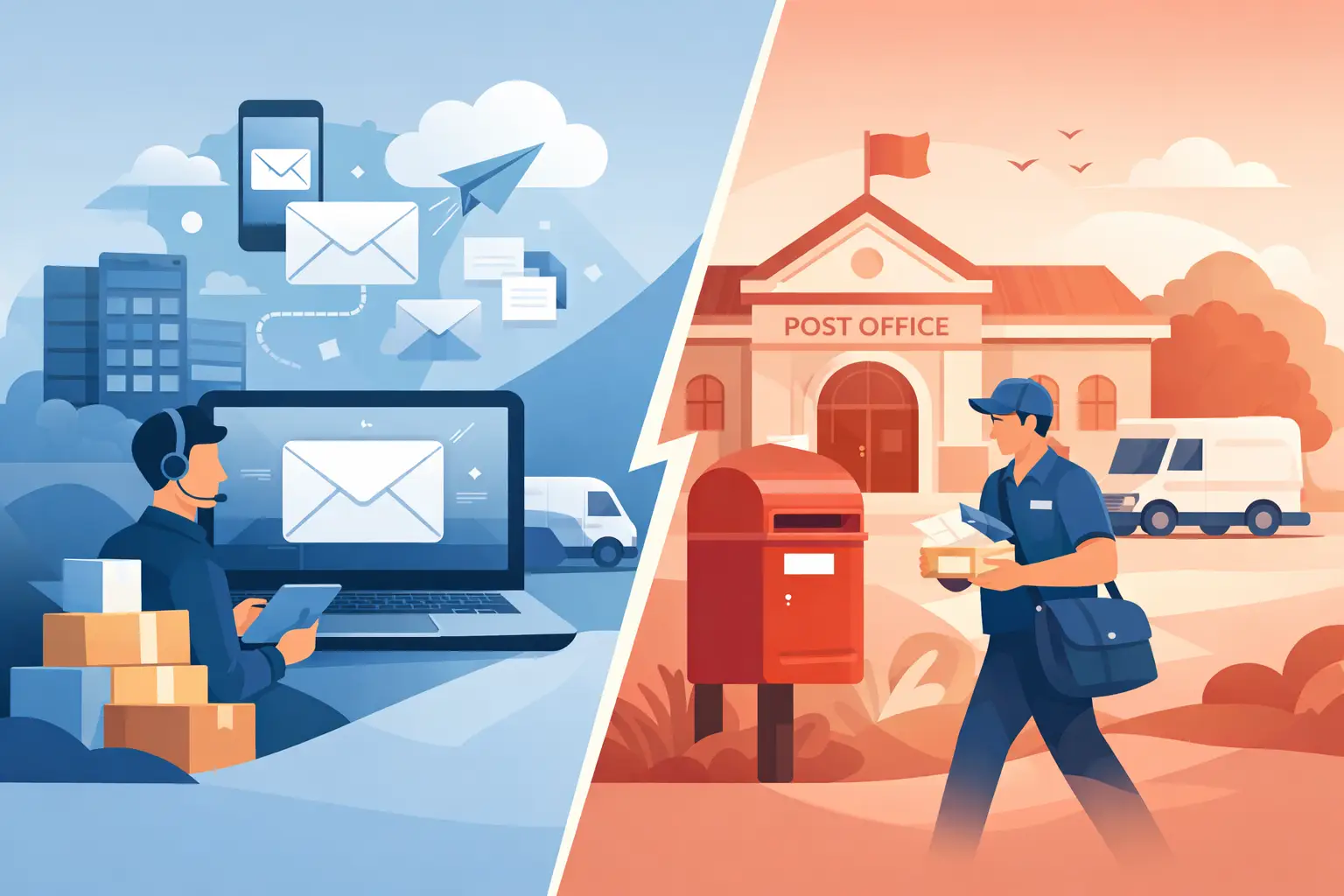
You do not usually realise how inconvenient posting a letter is until you need to send one quickly. The printer is out of ink, you cannot find an envelope, and the nearest branch is either shut or has a queue down the pavement. That is exactly where the choice between hybrid mail vs post office becomes practical rather than theoretical.
If you are sending a birthday card, either option can work. If you are sending a complaint to a retailer, a debt dispute, a letter before action or a formal cancellation notice, the differences matter more. You are not just posting paper. You are creating a record, meeting a deadline and making sure your letter looks credible when it arrives.
Hybrid mail vs post office: the basic difference
A Post Office visit is the traditional route. You write or print the letter yourself, fold it, put it in an envelope, address it, add postage and take it to a branch or postbox. You stay in control of the physical process, but you also do every step yourself.
Hybrid mail keeps the end result physical, but removes the home admin. You complete your letter online, and the service prints, packs and posts it on your behalf using Royal Mail. In plain terms, it is still a posted letter, just without the printer, envelope and branch visit.
That distinction is what makes hybrid mail attractive for people who need formal letters sent properly, but do not want friction. It is especially useful when the letter carries weight because of its wording, timing or delivery method.
Convenience is where the gap opens up
For most people, the biggest advantage of hybrid mail is not novelty. It is simply that it cuts out all the irritating bits.
Using the Post Office means gathering the document, checking the address format, printing pages, finding stationery, sealing everything up and then leaving the house. If you work full time, care for children, have limited mobility or just do not live near a convenient branch, that process can turn a five-minute task into a delayed one.
Hybrid mail reduces that task to an online form or document upload. You can sort it from your phone or laptop in the evening, during a lunch break or whenever the issue is fresh in your mind. That speed matters when you are chasing a missed refund, responding to a debt collector or sending a complaint within a required timeframe.
This does not mean the Post Office is obsolete. Some people prefer doing everything themselves, particularly for handwritten letters, one-off personal post or documents they are uncomfortable uploading online. But for routine formal correspondence, convenience strongly favours hybrid mail.
Which is faster in practice?
People often assume going to the Post Office is faster because you are physically handing over the letter yourself. Sometimes that is true. If you already have the printed document in front of you, an addressed envelope ready and a branch nearby with no queue, you can send it immediately.
In real life, though, the delay often happens before you reach the counter. Most hold-ups come from preparation, not delivery. Rewriting a letter, fixing formatting, printing attachments or finding proof documents usually takes longer than the walk to the branch.
Hybrid mail can be faster overall because it removes those prep steps. If the platform includes guided templates, that speeds things up further. A consumer rights complaint, DSAR or letter before action can be created in a more structured way than starting with a blank page.
Actual arrival time depends on the service level you choose, not just the sending method. Whether you use hybrid mail or visit a branch, Royal Mail delivery options such as Second Class, Signed For or Special Delivery affect the timeline. So the better question is not which is universally faster, but which gets your letter sent sooner from where you are right now.
Cost is not as simple as the stamp price
At first glance, the Post Office can look cheaper. You see the stamp price and compare it with the price of an online sending service. But that is not the whole cost.
Posting a letter yourself also involves paper, printer ink, envelopes and your own time. If you need tracked delivery, that adds cost too. If your printer is broken or you need to print at a shop, the maths changes quickly.
Hybrid mail often bundles the operational side into one clear price. That can make it better value than it first appears, especially for formal letters where presentation matters. You are paying for the letter to be printed, formatted, packed and posted without doing any of it yourself.
For people sending a single page and already set up at home, the Post Office may still come out cheaper. For people without a printer, or anyone who values time more than minor savings, hybrid mail often makes more financial sense than expected.
Presentation matters more for formal letters
A formal complaint or legal notice is not judged only on what it says. It is also judged on how it arrives.
A well-formatted physical letter tends to look more serious than an email dashed off in frustration. That matters when you are dealing with a retailer, lender, airline, landlord or public body. A professional layout, clear address details and a proper delivery method all help the letter carry more weight.
The Post Office route can achieve that if you prepare the document properly yourself. But that is also where many people lose confidence. They worry about wording, whether the format looks official enough, or whether they have included the right references.
Hybrid mail services designed for formal correspondence can reduce that uncertainty. If the service offers templates based on common UK disputes and references relevant legislation where appropriate, that gives ordinary people a more credible starting point. It does not replace legal advice, but it can make a letter look and read as if the sender means business.
Proof, tracking and peace of mind
When a letter matters, proof matters too.
At a Post Office counter, you can buy tracked or signed services and keep a receipt. That remains a solid option, especially if you want face-to-face confirmation. For some senders, that paper receipt is reassuring.
Hybrid mail can offer the same practical benefit if it uses Royal Mail services with tracking or signature options. The advantage is that you can arrange that proof without going anywhere. For complaints, disputes and pre-action correspondence, being able to show when a letter was sent is often just as important as the wording inside it.
This is one area where there is no obvious loser. What matters is whether you choose the right delivery service for the situation. A low-stakes personal letter may only need standard post. A deadline-driven complaint, legal escalation or important notice may justify Signed For or Special Delivery.
Security and privacy depend on the provider and the context
Some people hesitate over hybrid mail because their letter contains personal or sensitive information. That concern is reasonable. If you are sending account details, dispute records, medical information or prison correspondence, you want to know the process is secure.
The answer is not that one method is always safer than the other. It depends how you manage the document. A letter left on a shared printer tray or carried around in a bag is not automatically more secure than a properly protected online system. Equally, not every digital service handles data to the same standard.
So this is where due diligence matters. If you use hybrid mail, look for clear security practices, transparent handling of your data and trusted delivery options. If you post it yourself, think about where you print it, who can access it and how you store your records.
When the Post Office still makes more sense
Hybrid mail is efficient, but it is not the right answer every time.
If you want to send a handwritten card, include unusual physical items, or post something that needs custom packaging, the Post Office is the obvious choice. It can also suit people who prefer a fully offline process or need help from branch staff with postal formats and compensation rules.
There is also a trust factor. Some people simply feel more confident handing over a letter in person. That preference is valid, particularly for older customers or for anyone dealing with especially sensitive documents.
When hybrid mail is the better option
Hybrid mail tends to win when the letter is formal, time-sensitive or annoying to prepare. That includes consumer complaints, billing disputes, warranty issues, debt challenges, legal requests and official correspondence where wording and delivery both matter.
It is particularly useful if you do not own a printer, do not want to queue, or want to send a professionally presented physical letter without building it from scratch. Services like PostRight are built for exactly that sort of job - helping UK consumers send letters that are structured, credible and easy to dispatch.
The best choice comes down to what you are trying to optimise. If you want total hands-on control, the Post Office still has its place. If you want speed, convenience and a formal letter sent without the usual hassle, hybrid mail is usually the smarter option. When the real obstacle is not postage but getting started, removing the friction is often what gets the letter sent at all.