
How to Send Recorded Delivery Letter Online
Published 7 April 2026
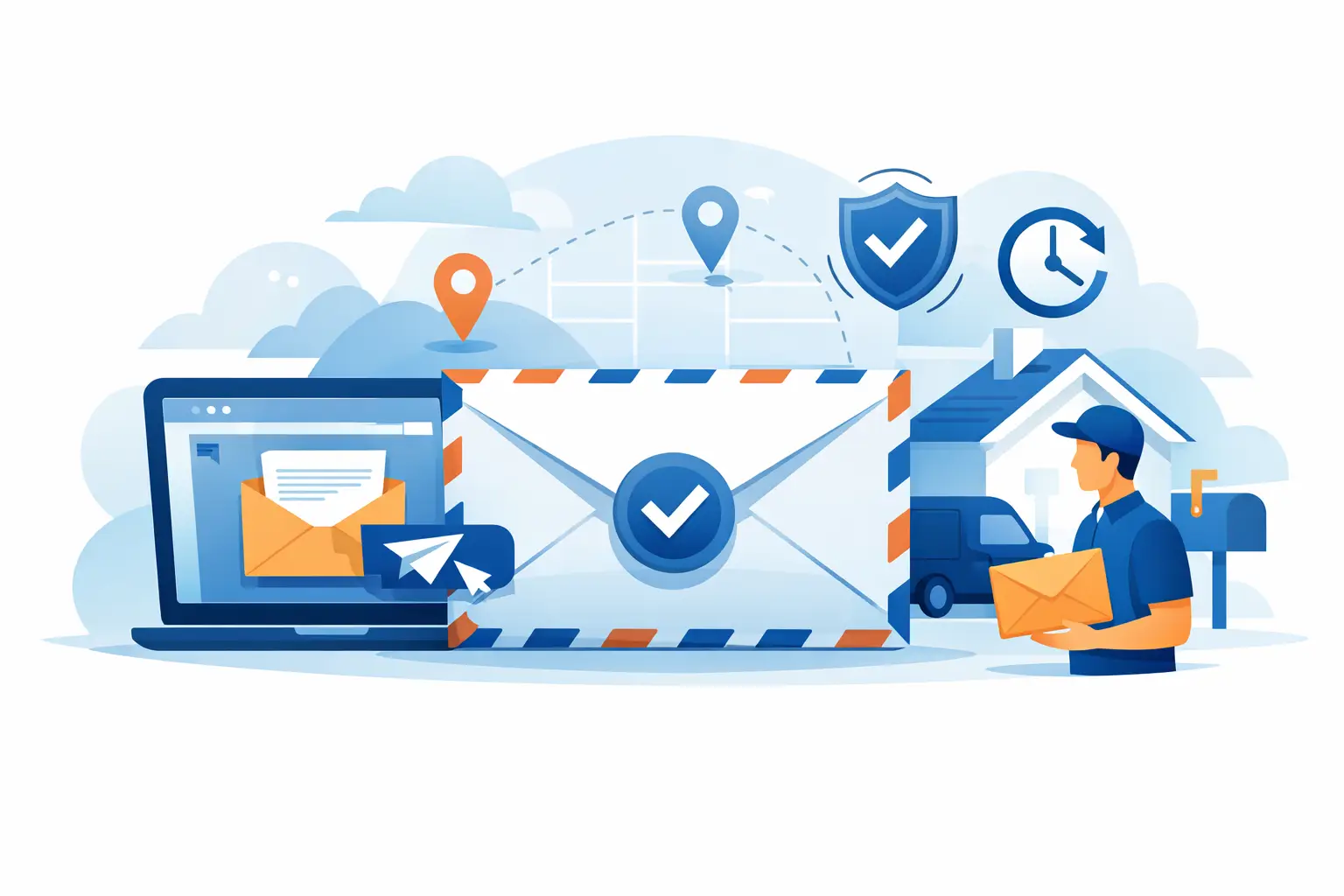
If you need proof that a letter was posted and delivered, the obvious question is whether you can send recorded delivery letter online without printing it yourself or queueing at the Post Office. In the UK, the short answer is yes - but it helps to know what "recorded delivery" usually means now, what level of proof you actually need, and when a faster or more secure service is worth paying for.
For many people, this comes up at the worst moment. A retailer is ignoring a refund request. A debt collector has written to you. You need to send a letter before action, a complaint to a service provider, or a formal notice that you want taken seriously. Email can be easy to ignore. A physical letter sent with delivery confirmation carries more weight, especially when timing and evidence matter.
What it means to send recorded delivery letter online
In everyday UK use, "recorded delivery" usually refers to Royal Mail Signed For. The older term is still common, but the service people typically mean is one where the letter is posted, tracked to delivery, and a signature is captured when it arrives.
To send a recorded delivery letter online, you do not need to print the letter, buy stamps, or visit a branch. You prepare the letter digitally, enter the recipient's details, choose the delivery option, and the service prints and posts it for you. The result is still a real physical letter sent through Royal Mail - just without the hassle at your end.
That distinction matters. You are not sending an email or a PDF attachment. You are arranging for a printed letter to be produced and dispatched on your behalf, with the postal service level chosen at checkout.
When recorded delivery is the right choice
Recorded delivery is often enough when you want a sensible balance between cost and proof. If you are writing to a business about a faulty product, disputing an incorrect bill, cancelling a subscription, or making a formal complaint, Signed For can give you evidence that the letter reached the address.
It is also useful for more personal or official correspondence where reassurance matters. That might include writing to a landlord, a public body, a prison, or your MP. In these situations, being able to show that the item was delivered can remove a lot of uncertainty.
But it is not always the best option. If your deadline is tight, or the contents are especially sensitive, Special Delivery may be the better fit. It depends on what you are trying to prove. Some people only need confirmation that a letter arrived. Others need stronger tracking, quicker delivery, and more secure handling.
Recorded delivery vs Signed For vs Special Delivery
This is where confusion usually starts. The old phrase "recorded delivery" is still widely used, but Royal Mail Signed For is the current service most people mean. It gives you proof of posting, confirmation of delivery, and a signature on arrival.
Special Delivery is a different service. It is designed for urgent or high-value items and comes with tighter delivery aims, end-to-end tracking, and higher compensation levels.
If you are sending a complaint letter, a consumer rights claim, or a formal notice where delivery evidence is helpful but speed is not critical, Signed For is often enough. If you are sending legal paperwork close to a deadline, or something particularly time-sensitive, Special Delivery may justify the extra cost.
Second Class can still be suitable in lower-stakes cases, especially if you simply want a formal letter sent cheaply. The trade-off is obvious - it costs less, but gives you less certainty and less visible proof if the recipient later claims nothing arrived.
Why people choose to send a recorded delivery letter online
The main reason is simple: it removes friction. Most people do not object to sending a formal letter because they disagree with the point. They put it off because the process is annoying. You need to draft it properly, format it, print it, find an envelope, buy postage, and get to a branch before it closes.
Online posting removes those steps. That matters when you are dealing with a dispute and want to act quickly while the details are fresh. It also matters if you do not own a printer, work long hours, or just want the task done in one sitting.
There is also a credibility benefit. A clearly formatted physical letter, sent through Royal Mail with delivery confirmation, tends to feel more formal than a rushed email. If your wording also refers to the relevant UK rules or legislation, your position is harder to dismiss.
How to send recorded delivery letter online
The process is usually straightforward. First, choose whether you are writing from scratch, uploading your own document, or using a guided template. Templates can be especially useful for complaints, disputes, and rights-based letters because they help you include the facts in the right order and keep the tone firm but professional.
Next, add the recipient's postal address and check it carefully. Even the best delivery service cannot fix an incorrect postcode or missing building number. Then review the letter itself. Names, dates, account references, order numbers, and any deadline you are setting need to be accurate.
After that, select your postage option. If you want to send recorded delivery letter online in the usual sense, you would choose Royal Mail Signed For. If you need more speed or tighter tracking, choose Special Delivery instead.
Finally, pay and submit. The service prints the letter, prepares it for post, and dispatches it for you. With PostRight, for example, that means no printer, no envelope, and no Post Office visit required. You complete the letter online, choose a Royal Mail service including Signed For or Special Delivery, and the platform handles the rest.
What proof do you actually get?
This is the practical question behind most searches on this topic. In a dispute, proof matters more than convenience.
With a recorded or Signed For service, you are usually looking for three things: evidence that the letter was posted, confirmation that it was delivered, and a delivery record tied to the address. That can be enough to support your position if the recipient later claims they never received anything.
Still, proof of delivery is not the same as proof that the recipient read the letter or agreed with it. A signed-for item shows arrival, not acceptance of your argument. That is why the quality of the letter itself still matters. It should be clear, factual, and specific about what you want the recipient to do next.
When a template helps and when it does not
Templates are useful when you know the scenario but are unsure how to phrase it. If you are disputing a retailer refund refusal, claiming for a delayed flight, challenging debt collection, or sending a letter before action, a guided template can save time and reduce mistakes. It can also help you refer to the right legal basis, such as the Consumer Rights Act 2015, the Consumer Credit Act 1974, UK GDPR, or EC 261 flight delay rules where relevant.
That said, not every letter fits a template neatly. If your situation is unusual, or you already have a carefully drafted document, uploading your own PDF or writing a custom letter may be the better route. The key is not whether the letter comes from a template. It is whether the content is accurate, relevant, and complete.
Common mistakes to avoid
The biggest mistake is choosing the wrong delivery level for the situation. People often pick the cheapest option and only later realise they needed delivery confirmation. Others pay for premium delivery when there was no real deadline and Signed For would have been sufficient.
Another common issue is weak wording. A letter that rambles, makes emotional claims without facts, or fails to state the outcome you want can undermine your position. Keep it direct. Explain what happened, what rule or agreement you rely on, what you want done, and when you expect a response.
It is also worth checking whether the organisation has a specific address for complaints, legal notices, or data requests. Sending to the wrong department can cause avoidable delays, even if the item is delivered successfully.
Is sending a recorded delivery letter online legally valid?
In many everyday UK situations, yes - because what arrives is still a physical posted letter. The fact that you arranged the printing and posting online does not make it less real. What matters is that the letter is correctly addressed, properly sent, and appropriate for the purpose.
Still, some matters are more sensitive than others. Court rules, contractual notice clauses, and regulatory processes can be specific about timing and method of service. If the stakes are high, it is worth checking the exact requirement before choosing Signed For or any other delivery type. Convenience should not come at the expense of compliance.
A formal letter often gets action because it shows you are serious enough to put your case in writing and send it properly. If sending it online helps you do that faster and with fewer excuses to delay, that is usually a practical advantage, not a compromise.
If you have been meaning to send one for days, that is probably your answer. The best letter is the one that gets written, posted, and tracked while the issue can still be resolved.