
Royal Mail Proof of Delivery Guide UK
Published 12 May 2026
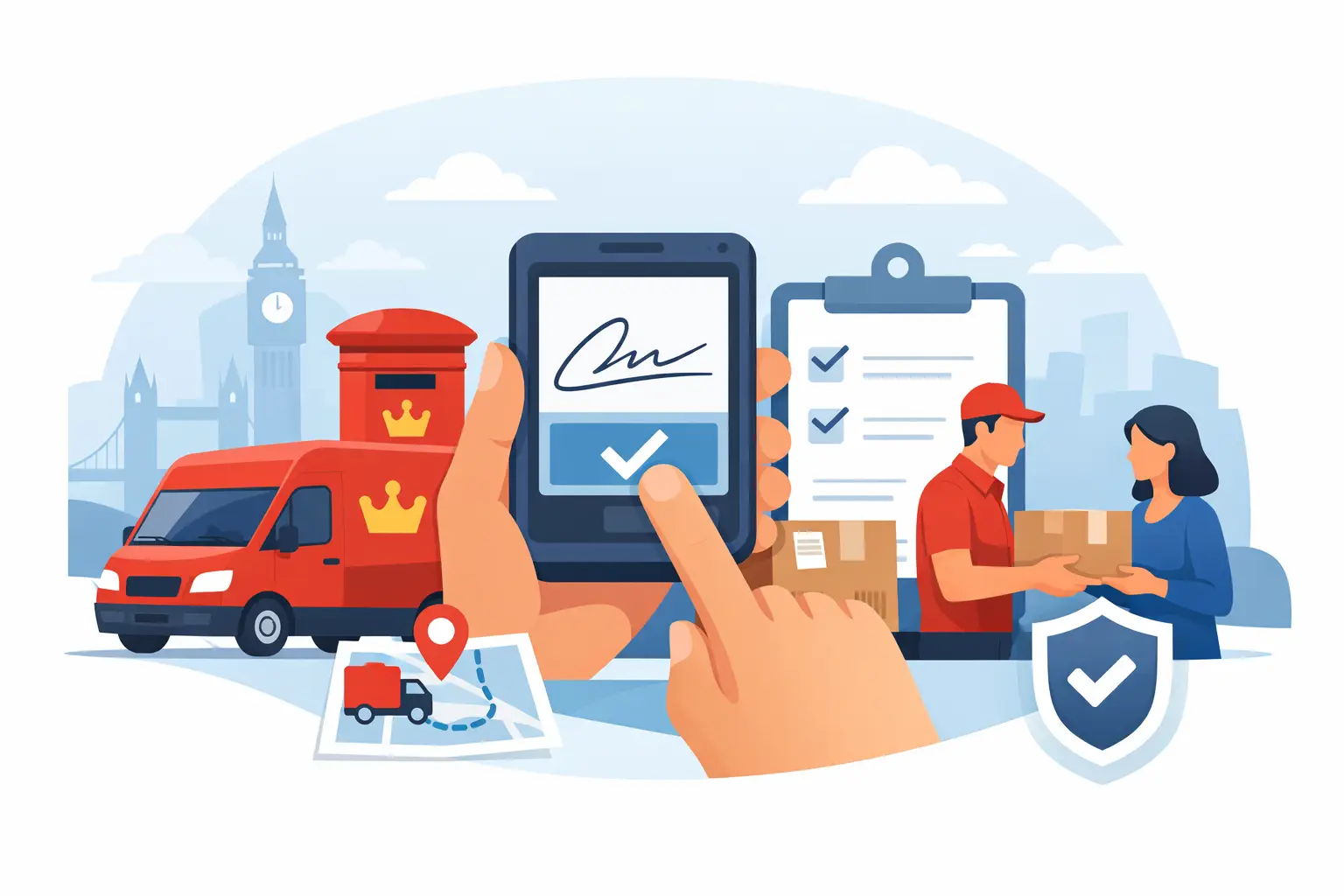
A letter can carry real weight in a dispute, but only if you can show it arrived. That is where a Royal Mail proof of delivery guide becomes useful. If you are sending a complaint, a letter before action, a cancellation notice or any other formal correspondence, knowing what evidence Royal Mail provides can save time and strengthen your position.
For many people, the confusion starts with one simple question: does tracking mean the same thing as proof of delivery? Not always. Some services show progress through the network. Others confirm delivery with a signature or delivery scan. The right option depends on what you are sending, how urgent it is, and whether you may need to rely on delivery evidence later.
What proof of delivery means with Royal Mail
Proof of delivery is evidence that an item was delivered to the address you sent it to. With Royal Mail, that evidence may include a delivery confirmation, a signature, or tracking data showing the date and time of delivery.
That sounds straightforward, but the detail matters. If you are sending a birthday card, basic confirmation may be enough. If you are writing to a trader about faulty goods, disputing a debt, or giving formal notice before legal action, you may want clearer delivery evidence. In those cases, a service that provides stronger confirmation is usually worth the extra cost.
Proof of delivery is often less about the letter itself and more about what happens after. If the recipient says they never received your complaint, your cancellation request or your legal notice, your delivery record helps show you acted properly and on time.
Royal Mail proof of delivery guide for each service
Royal Mail offers several posting options, but not all of them give you the same level of evidence.
Second Class and First Class
Standard First Class and Second Class post are the basic options. They are affordable and suitable for everyday letters, but they do not generally provide full proof of delivery. You may have proof of posting if you buy at a Post Office counter, but that is not the same as proof the item reached the recipient.
For low-stakes post, this may be perfectly reasonable. For anything time-sensitive or disputed, it is usually a weak option because you can show you sent the letter, but not necessarily that it arrived.
Royal Mail Signed For
Signed For adds a layer of confirmation. It is designed to provide a signature on delivery, which gives stronger evidence than ordinary post. If your main concern is being able to show the item reached the address, Signed For is often the minimum sensible choice.
Even so, it is worth being realistic about what it does and does not do. Signed For is not the same as full end-to-end tracking. It is more about confirmation at delivery than detailed movement updates throughout the journey. For many consumer disputes, that is enough. For higher-value or urgent documents, you may want more.
Royal Mail Tracked 24 and Tracked 48
Tracked services sit between Signed For and Special Delivery in cost and protection. They offer a full scan history through the network, so you can see when your item was accepted, when it was in transit, and when it was delivered. That detailed timeline is often more useful in a dispute than a single delivery scan, because it removes ambiguity about exactly when the recipient had the chance to act.
Tracked 24 aims for next working day delivery, while Tracked 48 typically takes one to two working days. Both include delivery confirmation and compensation cover up to £100, which is enough for most consumer correspondence. If you need a clear evidence trail at a sensible price, and you do not need the guaranteed timing of Special Delivery, Tracked is often the practical middle option for formal letters and dispute correspondence.
Royal Mail Special Delivery Guaranteed
Special Delivery Guaranteed is the strongest option when proof, speed and security all matter. It includes tracking and delivery confirmation, and it is intended for urgent or important items.
If you are posting original documents, sending something with a strict deadline, or need the clearest evidence available from Royal Mail, this is usually the best fit. It costs more, but that extra cost can be justified if the consequence of a missing or disputed letter is serious.
Proof of posting vs proof of delivery
These terms are often mixed up, but they are different.
Proof of posting shows that you handed an item over for dispatch. It can support your account and may help with compensation claims, but it does not prove the recipient got the letter.
Proof of delivery shows that the item reached the destination and, depending on the service used, may include the date, time and signature. If you expect the other side to challenge receipt, proof of delivery is the stronger evidence.
In practice, proof of posting is useful, but proof of delivery carries more weight in complaints, contract disputes and pre-action correspondence. If the timing of your letter matters, this distinction is not a technicality. It can affect whether your evidence stands up when challenged.
When Signed For is enough and when it is not
A lot depends on the stakes.
Signed For is often suitable for retailer complaints, refund disputes, warranty issues, service complaints and cancellation notices. In these cases, you usually want a clear record that the letter was delivered, without paying for the highest-tier service.
Special Delivery is better suited to urgent legal notices, original identity documents, high-value items and anything where delay would create a real problem. If you are close to a deadline, or the recipient has already been difficult, the added security is often worth it.
There is always a trade-off. The cheapest service saves money upfront but may leave you with weaker evidence. The premium service costs more but reduces uncertainty. If your letter is part of a dispute, spending a little more on delivery can be cheaper than arguing later about whether it arrived.
How to check Royal Mail proof of delivery
If you have used a qualifying service, you can usually check the delivery status using the reference number from your receipt or dispatch confirmation. That record may show whether the item is in transit, delivered, or signed for.
When you check, focus on the details that matter later: the delivery date, the time, the postcode or address confirmation, and whether a signature was captured. If the matter is sensitive, keep a copy of that information. Screenshots or downloaded confirmations can be useful if online records change or become harder to retrieve.
This is particularly important for formal letters. If you are writing to a company, landlord, public body or debt collector, keep your letter copy and your delivery evidence together. A well-written letter helps, but being able to show exactly when it was delivered makes your position much harder to dismiss.
What counts as good evidence in a dispute
The best evidence is usually a combination of documents rather than one single item.
A copy of the letter, the date it was sent, the address used, and the proof of delivery all work together. If the recipient later claims they knew nothing about your complaint or notice, that bundle of evidence is far more persuasive than simply saying, "I posted it".
This matters in ordinary consumer problems as much as in legal disputes. If you are challenging a retailer over faulty goods, disputing an incorrect bill or escalating a complaint, delivery evidence shows you gave the recipient a proper chance to respond. It helps establish a clear timeline and shows you acted reasonably.
Common misunderstandings about Royal Mail proof of delivery
One common mistake is assuming that any tracked-looking update counts as legal proof. It might help, but not every service gives the same level of confirmation.
Another is assuming a signature always means the named person signed for it themselves. In reality, a signature may be provided by someone at the address or accepted under delivery procedures in place at the time. That does not make it useless, but it does mean the context matters.
It is also easy to focus too much on delivery and forget the letter itself. Proof that an empty envelope arrived is not much help. Always keep a full copy of what you sent, especially if the letter contains key dates, demands, or references to your legal rights.
Choosing the right option when sending formal letters
If your priority is simply getting a letter out cheaply, standard post may do the job. If your priority is accountability, use a service that gives proper delivery confirmation.
That is why many people sending formal correspondence choose a service that handles both the wording and the posting process, with clear delivery options built in. PostRight, for example, lets users send complaint letters, legal templates and custom letters without printing or visiting the Post Office, with Royal Mail Second Class, Signed For and Special Delivery options depending on how much proof and urgency the situation calls for.
The practical point is simple: match the postage service to the risk. The more likely the letter is to be disputed, ignored or relied on later, the more valuable proper proof of delivery becomes.
Final thought
If you may need to show that a letter arrived, do not treat proof of delivery as an afterthought. Pick the service based on the consequences of doubt, keep a copy of everything, and make it easy for yourself to prove the timeline if you ever have to.