
Can I Post Letters Without a Printer?
Published 10 May 2026
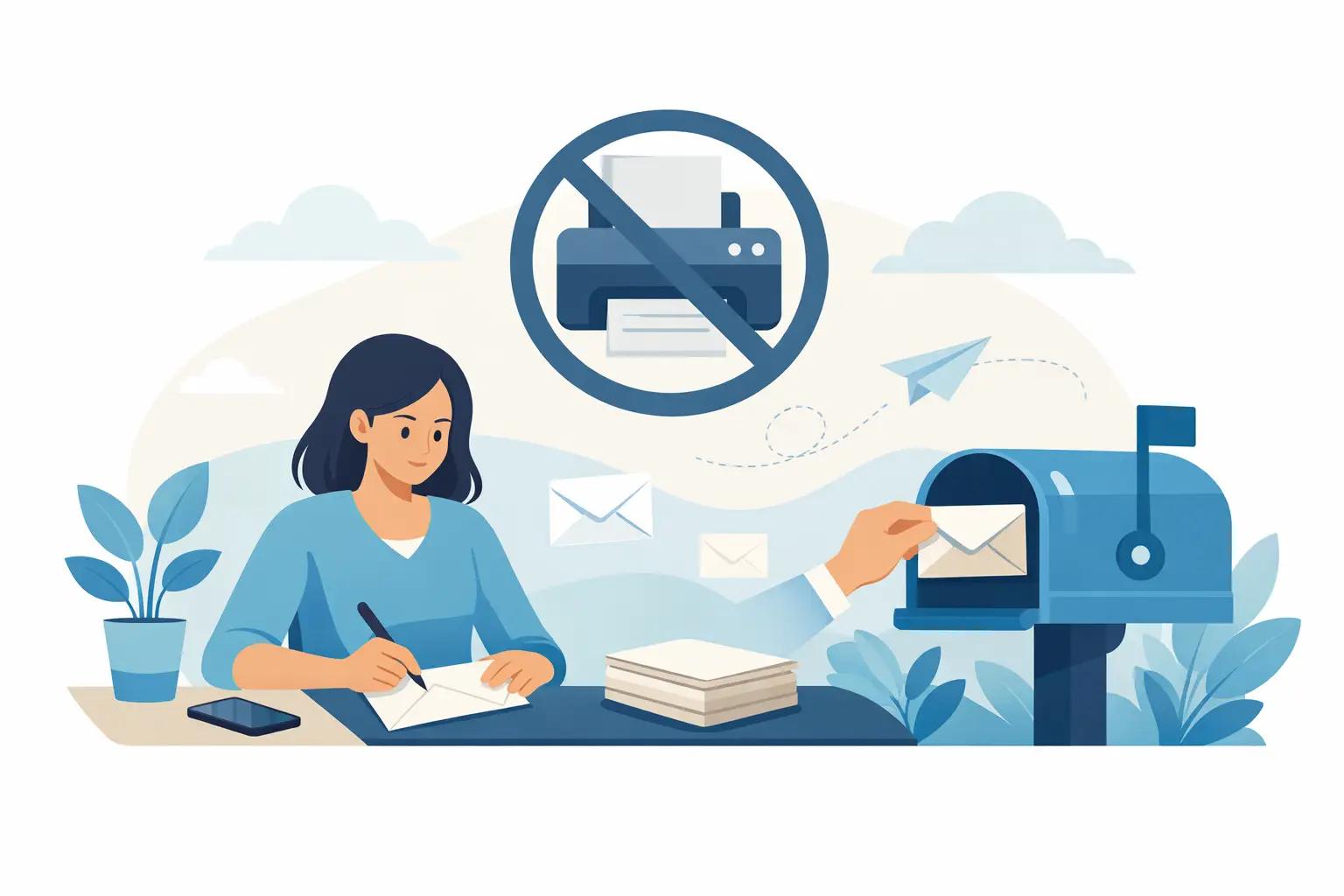
You need to send a proper letter, not another email that gets ignored. Maybe it is a complaint to a retailer, a refund dispute, a letter before action, or something personal that still needs the weight of physical post. If you are asking, can I post letters without printer access, the short answer is yes, and in most cases it is easier than people expect.
The bigger question is not whether it is possible. It is which method gives you the right balance of speed, cost, proof of posting and effort. That matters more when the letter is time-sensitive or forms part of a dispute.
Can I post letters without printer access?
Yes. You do not need to own a printer to send a physical letter in the UK. You have a few practical options.
You can handwrite the letter, ask a library or print shop to print it, use workplace or university printing if that is available to you, or use a hybrid mail service that prints and posts the letter on your behalf. Which one makes sense depends on what you are sending.
For a birthday note, handwriting may be fine. For a complaint about a faulty product, a debt collection dispute or a formal legal letter, presentation and delivery method can carry more weight. A typed, clearly formatted letter sent through Royal Mail often feels more credible and is easier to keep consistent, especially if you need to refer back to it later.
The main ways to send a letter without printing at home
The traditional answer is simple: write it by hand, put it in an envelope and post it. That still works. It is cheap, and for many personal letters it is perfectly appropriate.
The trade-off is that handwritten letters are slower to prepare, harder to edit and not always ideal for formal matters. If you are setting out dates, account numbers, legislation or a timeline of events, handwriting can become messy quickly. If the recipient is a business or public body, clarity matters.
The second option is to get the letter printed elsewhere. Libraries, internet cafés, stationery shops and local print shops often offer pay-per-page printing. This works well if you only send letters occasionally and do not mind travelling. The downside is friction. You still need to format the document, get to the venue, print it, buy or bring an envelope, address it and then either find a post box or visit a Post Office.
A third option is to use someone else's printer, such as at work or through a friend. That can be convenient, but it is not always suitable for sensitive correspondence. If you are writing about a legal dispute, financial issue, medical concern or complaint, privacy may matter more than convenience.
The fourth option is usually the most efficient if you want the letter typed, printed and posted properly without doing any of the physical steps yourself. A hybrid mail service lets you write online, or upload your own document, and the service handles printing, formatting and dispatch.
When a no-printer option makes the most sense
If your letter is informal and there is no urgency, almost any method will do. But some situations call for something more structured.
A formal complaint is one example. Businesses often respond differently when they receive a physical letter rather than another support message. The same applies to disputes over missing deliveries, incorrect bills, refused refunds, warranty claims or cancelled subscriptions that keep billing you.
It also matters for legal and regulatory correspondence. If you are sending a data subject access request, a letter before action or a formal escalation, you want the letter to look deliberate and complete. You may also want tracked or signed delivery, depending on the circumstances.
Then there are personal cases where ease matters. Writing to a prisoner, contacting your MP, sending a future-dated personal letter or posting correspondence on behalf of a relative can all be straightforward in theory, but awkward in practice if you do not have a printer, envelopes or stamps at home.
What to consider before choosing a method
The first thing is formality. A handwritten note can feel personal, but a typed letter is often better for complaints, claims and official correspondence. It is easier to read, easier to scan and easier to store as a record.
The second is proof. If the letter could affect money, deadlines or legal rights, think about how you will show it was sent. Standard post may be enough in some cases. In others, Signed For or Special Delivery is a better fit.
The third is time. Printing a letter elsewhere can seem cheap until you factor in travel, queueing and the chance of needing to redo it because of a typo or formatting issue. If you are already short on time, the cheapest route is not always the easiest one.
The fourth is privacy. Not every letter is something you want to print in a shared office or hand over at a public print counter. That is particularly true for letters involving disputes, debts, complaints or personal family matters.
Can I post letters without printer use and still make them look professional?
Absolutely. You do not need home equipment to send a professional-looking letter. What matters is the wording, the structure and the delivery method.
A good formal letter should identify the parties clearly, explain the issue in plain English, refer to relevant dates or reference numbers and state what you want the recipient to do next. For many consumer disputes, it also helps if the wording reflects the relevant UK legal framework. That does not mean stuffing the page with legal language. It means the letter is grounded, specific and credible.
This is where guided templates can save time. Instead of starting from a blank page, you answer straightforward prompts and the letter is built around your situation. If the issue involves consumer rights, billing disputes, debt collection or a formal complaint, using the right structure can make your case easier to follow.
A simpler route for formal letters
For people who need to send a physical letter but do not want the hassle, a service like PostRight removes the practical barriers. You choose a template or upload your own document, complete the details online, and the letter is printed and posted for you via Royal Mail.
That is useful if you are sending a complaint to a retailer, claiming compensation for a flight delay, disputing a debt, requesting personal data, escalating a service issue or simply sending a custom letter without dealing with paper, envelopes or stamps. It is also helpful if you want delivery options beyond standard post, such as Signed For or Special Delivery.
The value is not just convenience. It is consistency. The letter is properly formatted, dispatched without a trip to the Post Office and easier to send promptly while the issue is still fresh. When you are chasing a deadline or trying to show you acted reasonably, that speed can matter.
What if you already have the letter as a PDF
Many people are not starting from a blank page. You might have a solicitor-drafted document, a signed letter saved from your laptop, a scanned notice, or correspondence on headed paper. In that case, uploading a finished PDF can be the fastest route. You keep your wording, references and attachments in one file and avoid retyping into a web form.
A few quick checks before uploading. Make sure every page is included, text is not cut off, and any signature or attachment is clear enough to print. If you are working from a phone scan, check that shadows, blur or skewed pages have not made the document look unprofessional.
Most letters should be A4 portrait. Unusual formatting, narrow margins, landscape pages or coloured backgrounds can still print but the result depends on how the service handles those files. Clean, simple formatting tends to produce the best result.
Review the address carefully too. A strong letter is wasted if the postcode is wrong or the department name is missing. This matters more with large organisations, government departments, prisons and legal recipients where internal routing can slow things down.
If your wording is sensitive (HR correspondence, school issues, tenancy matters, business documents), a PDF upload gives you control over exactly what arrives. If you are less confident in your draft, a guided template with proper legal references may be safer than uploading a weak letter.
Situations where handwriting is still the right call
Not every letter needs a service or a template. A short note to a friend, a card insert or a simple personal message may be better by hand. Handwriting can feel warmer and more human.
It is also fine if you genuinely do not need a digital record or a polished layout. The key is matching the method to the purpose. If the goal is connection, handwriting often wins. If the goal is accountability, typed letters usually do a better job.
Common mistakes to avoid
One common mistake is assuming email is always enough. For many routine issues it is, but when a matter is being ignored, disputed or escalated, physical post can create more pressure to respond.
Another is focusing only on postage cost. If you spend an hour finding a printer, buying supplies and queueing to send one letter, the low headline cost may not be much of a saving.
A third is sending a letter that is vague. Whether you handwrite it or send it through a service, the content still matters. Be specific about what happened, what you want, and when you expect a response.
So, can I post letters without printer access?
Yes, and for many UK senders it is now the easiest part of the process. The real decision is whether you want to handle the physical steps yourself or use a service that does the printing and posting for you.
If your letter is formal, sensitive or time-critical, removing those extra steps usually makes sense. It gets the letter out the door faster, keeps the presentation professional and helps you act while the issue is still moving. When a matter deserves more than an email but less hassle than doing everything by hand, that middle ground is often the smartest choice.
Sometimes the hardest part is not writing the letter. It is finally sending it.